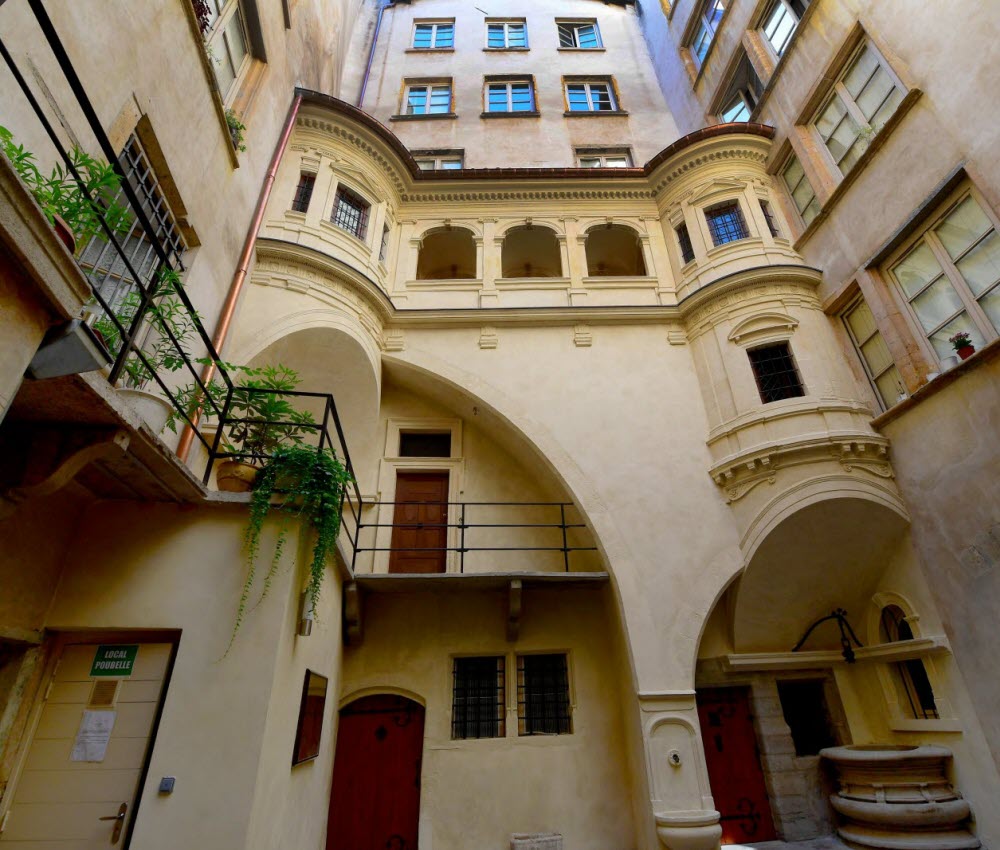
Italian-style Galleries
These open-air walkways feature loggias and balustrades inspired by Renaissance design elements found in Tuscany.
Look up to see the layered balconies against the sky.
A traboule is a covered passageway unique to Lyon, threading through buildings to connect parallel streets or courtyards. First built in the 4th century and expanded during the Renaissance silk trade, these corridors were designed to move fabric quickly from workshops to the Saône riverbanks while keeping it dry. Today, forty traboules in Vieux Lyon remain publicly accessible under a courtyard agreement that asks visitors to respect the residents who still live along these routes.
Quick answer
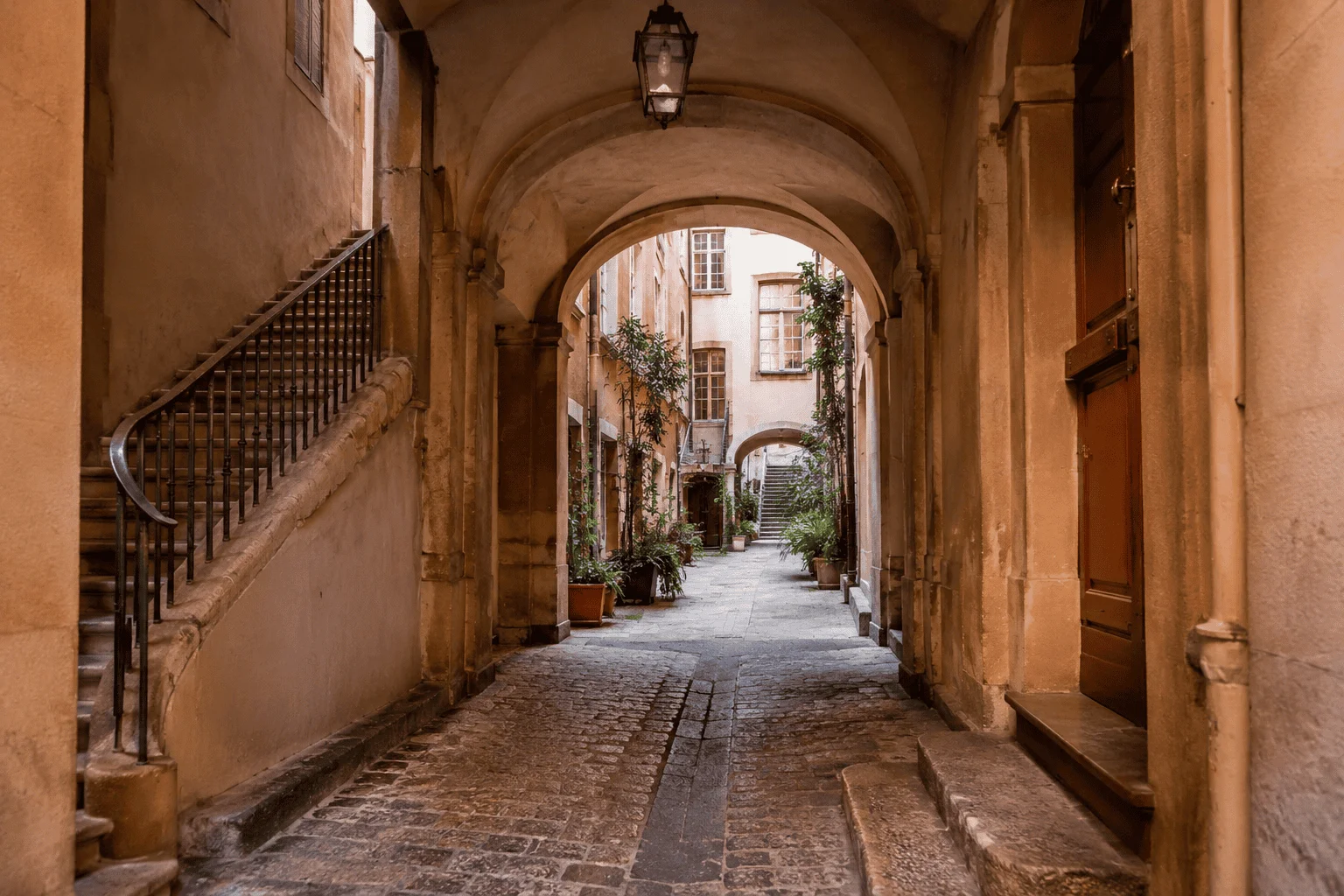
A traboule is a hidden passageway that cuts through one or more buildings, linking streets or courtyards in Lyon's old quarters. The term comes from the Latin *trans ambulare*, meaning to pass through. Most date from the Renaissance when silk workers used them to transport fabric without exposing it to weather. Vieux Lyon holds the highest concentration, with public access granted from 07:00 to 19:00 daily under a neighborhood courtesy agreement.
The word traboule appears nowhere else in France with the specificity it carries in Lyon. These passageways were not designed as shortcuts for tourists but as working infrastructure: the silk weavers of the 16th and 17th centuries needed fast, weather-protected routes between their hilltop ateliers and the riverside merchants. A single traboule might pass through three courtyards, climb a spiral staircase, cross a vaulted gallery, and emerge two streets away. The architecture reflects that utility—stone corridors worn smooth by centuries of foot traffic, iron gates that residents still unlock each morning, and Renaissance courtyards with galleries that once doubled as drying racks. What is a traboules in lyon today is both monument and inhabited space. The Courtyard and Traboule Agreement opened forty passages to the public in Vieux Lyon, but they remain private property. Residents live behind the doors that line each corridor. The gates close at 19:00, and visitors are expected to move quietly, avoid lingering in stairwells, and never enter a passage marked *privé*. Early morning visits between 07:00 and 11:00 minimize disturbance and allow natural light to fill the courtyards before the narrow streets fall into shadow. The most accessible traboules cluster along Rue Saint-Jean and Rue du Bœuf. The passage at 54 Rue Saint-Jean leads through a Renaissance courtyard with a turret staircase and pink stone columns. At 27 Rue du Bœuf, the traboule connects four buildings across three courtyards, each with different ceiling heights and masonry styles that mark phases of construction from the 1500s onward. No two traboules follow the same layout. Some are straight corridors; others bend at right angles or split into branches. The consistency lies in their function: every traboule was built to move people or goods from one elevation or street grid to another without stepping into open air. Understanding Lyon's traboules means recognizing them as living urban tissue rather than static heritage sites. They remain free to enter because residents agreed to share access, and that access depends on visitor respect for the agreement. The passageways reward those who walk them as the silk workers did—purposefully, quietly, and with attention to the architecture that still serves the quarter five centuries after the looms went silent.
“A single traboule might pass through three courtyards, climb a spiral staircase, cross a vaulted gallery, and emerge two streets away.”
The term traboule derives from the Latin trans ambulare—to pass through—and these distinctive covered passageways first appeared in Vieux Lyon during the 4th century when the city served as Gaul's administrative capital. Early examples connected the heights of Fourvière hill to the Saône riverbanks, allowing residents to fetch water without exposure to weather or terrain hazards. By the Renaissance, Lyon had emerged as Europe's silk-weaving center, and the traboules took on commercial urgency. Master weavers commissioned tall residential buildings—canuts workshops—with interconnected courtyards and staircases that allowed bolts of precious silk to travel from loom to merchant without rain damage or theft. The narrow alleyways of the Saint-Jean and Saint-Georges quarters were thus laced with over 200 private passages, many featuring vaulted ceilings, carved stone corbels, and Italian-inspired loggias that reflected the wealth flowing through the textile trade. During the French Revolution, traboules served as escape routes for persecuted clergy and aristocrats. Two centuries later, Resistance fighters used the same passageways to evade Nazi patrols, moving weapons, intelligence, and refugees through a labyrinth the occupiers could not map. Jean Moulin's network famously exploited the interconnected courtyards to coordinate sabotage operations between 1942 and 1943. After the Liberation, many traboules fell into neglect as industrial silk production migrated elsewhere and residents sealed entrances for privacy. A municipal preservation campaign launched in 1983 restored key passages and instituted the Courtyard Agreement, which obligates property owners to keep designated traboules open to pedestrians during daylight hours. Today, visitors walking through what is a traboules in lyon can trace the original Renaissance stonework at 54 Rue Saint-Jean and 27 Rue du Boeuf, where iron-banded doors open onto spiral staircases and井-lit galleries that once echoed with the clatter of wooden looms and the whispered coordinates of underground networks.
Roman-era passages connect Fourvière hill to the Saône, allowing water collection and shelter from weather.
Lyon becomes Europe's silk capital; weavers build interconnected workshops with covered corridors to protect fabric.
Traboules serve as escape routes for clergy and nobles during the Reign of Terror.
Resistance fighters, including Jean Moulin's network, use the passages to evade Nazi patrols and move intelligence.
City of Lyon launches preservation campaign and institutes the Courtyard Agreement to keep traboules publicly accessible.
UNESCO inscribes Vieux Lyon, including its traboule network, as a World Heritage Site.
Traboules serve as sheltered passages connecting streets through private buildings, defined by their distinct architectural transitions. Visitors moving through these networks observe a sequence of transitionary spaces that reveal the internal character of Vieux Lyon.
These open-air walkways feature loggias and balustrades inspired by Renaissance design elements found in Tuscany.
Look up to see the layered balconies against the sky.
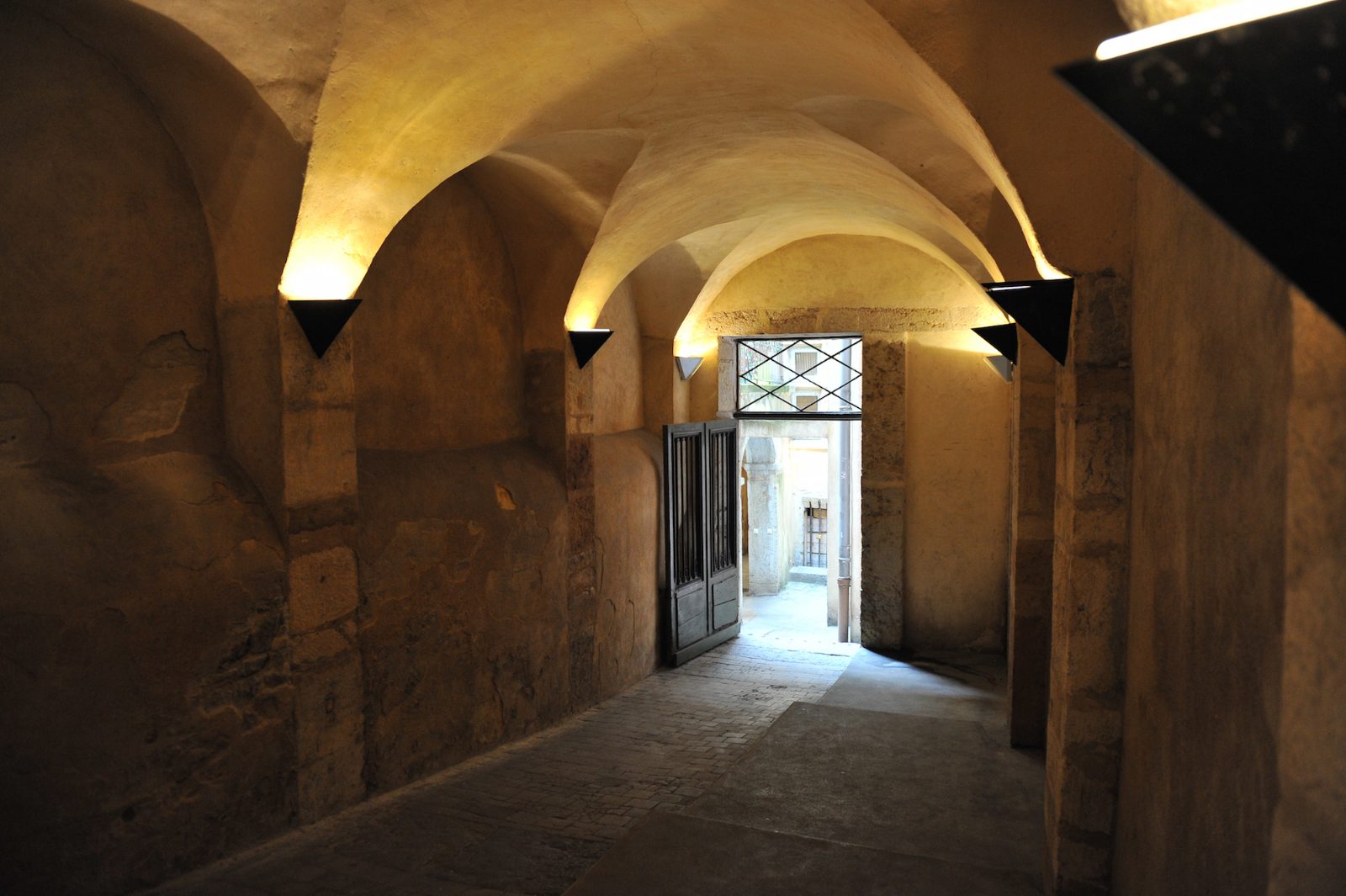
The passages often transition into stone-vaulted corridors, displaying barrel or ribbed vaulting techniques.
Notice the transition from flat to arched masonry.
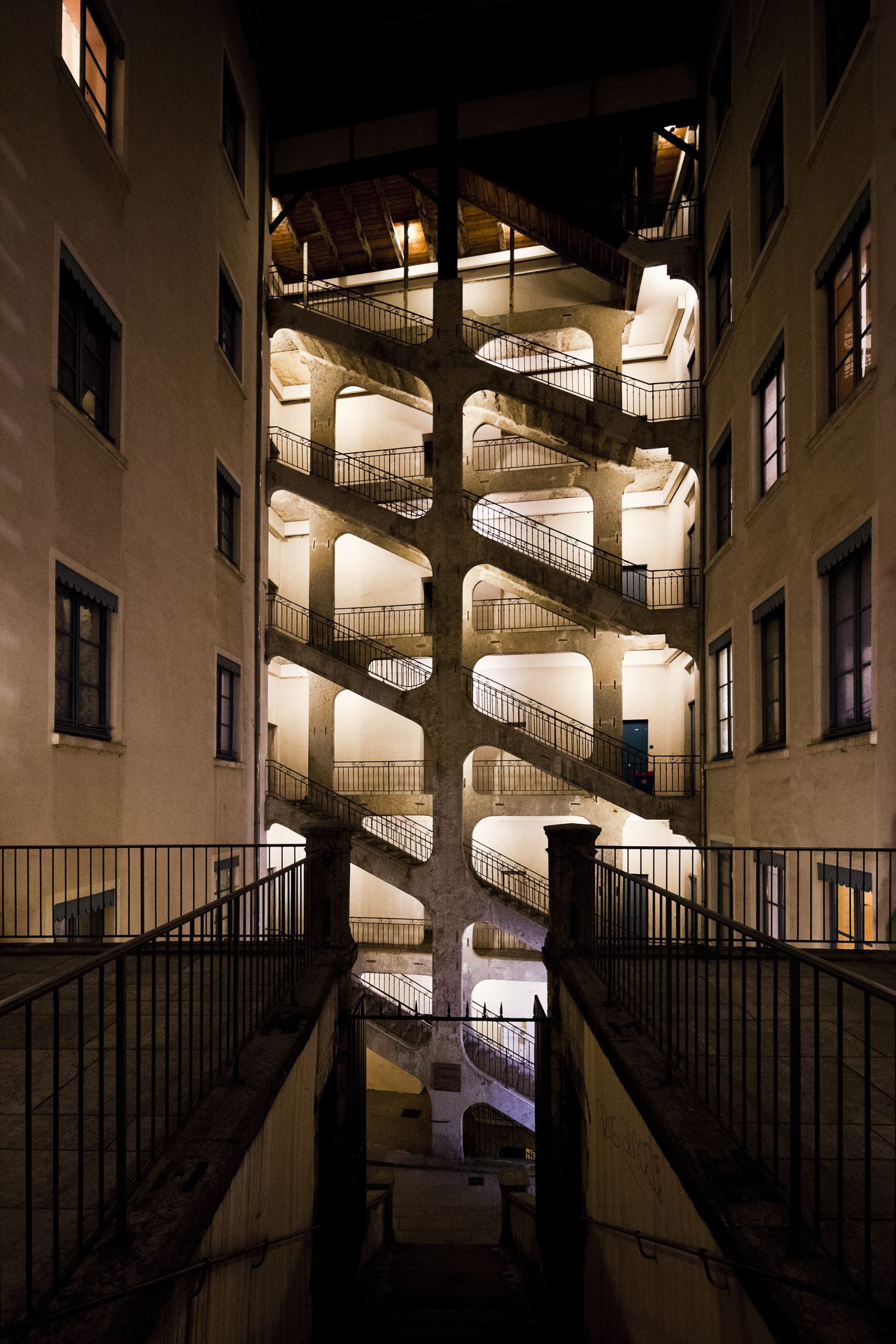
Located within inner courtyards, these towers often house intricate winding stone staircases.
Walk slowly to observe the geometry of the central column.
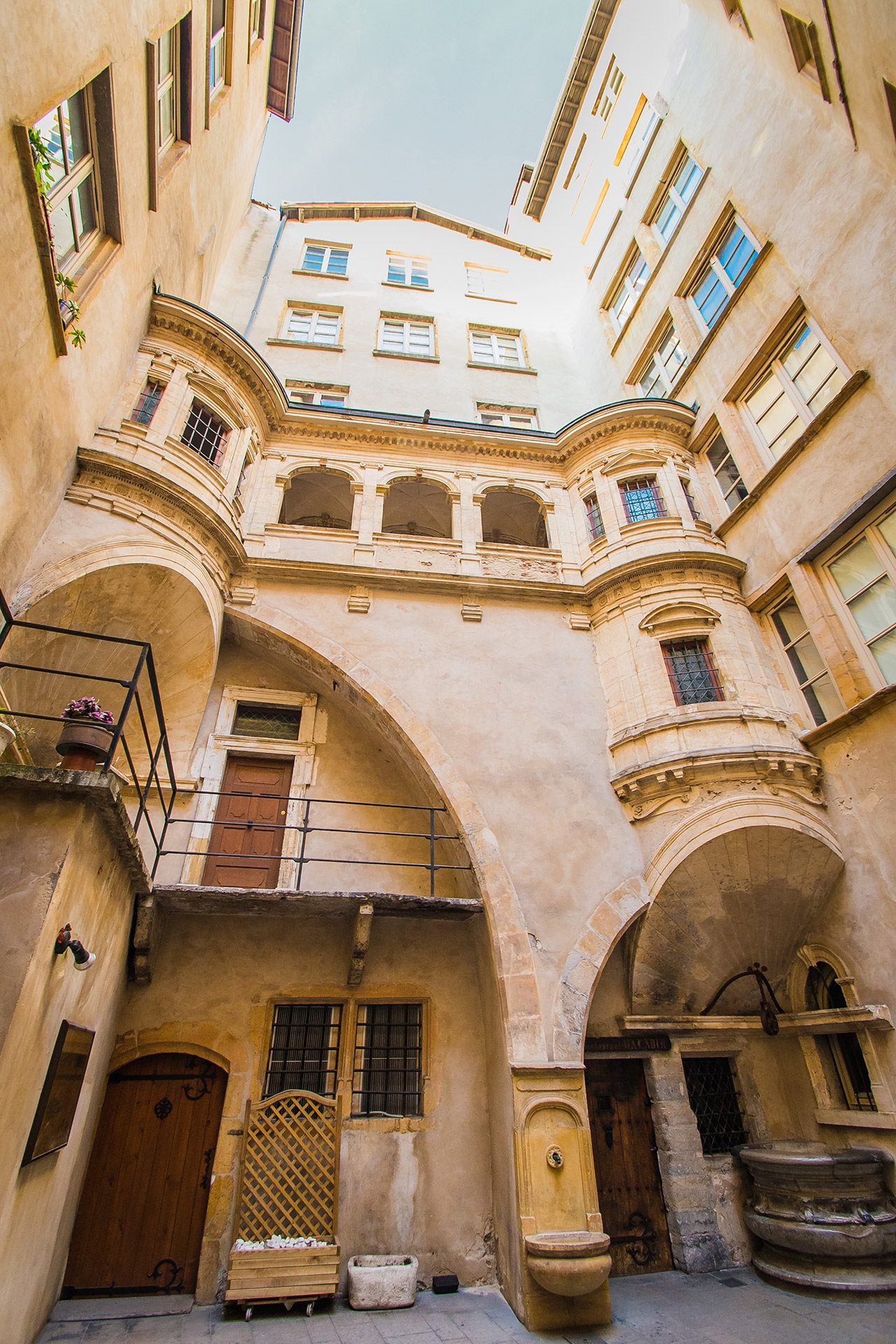
These enclosed spaces act as the structural center of the passage, often containing stone wells or decorative facades.
Stand in the center to view the complete vertical architecture.
The best arrival window for visiting the traboules is 07:00–11:00. Arriving during this early morning period minimizes crowds and ensures you avoid disturbing the residents who live within these private spaces.
Mild temperatures (12°C–20°C)
Spring offers pleasant walking conditions before the summer heat. Early morning starts remain essential for quiet access.
Warm temperatures (18°C–28°C)
Tourist numbers peak during these months. Visit immediately at 07:00 to avoid significant foot traffic.
Cooler temperatures (10°C–18°C)
The foliage in Vieux Lyon complements the architecture. The early morning window remains the quietest time to explore.
—
Mid-week mornings provide the most peaceful experience. Arriving at 07:00 allows for a respectful visit before the daily activity begins.
Verdict: For the quietest experience, plan your visit for a weekday morning between 07:00 and 11:00 during the months of April or October.
The traboules in Vieux Lyon are accessible to the public daily during set hours. These passages remain open throughout the week to accommodate visitors and residents.
Access to the traboules in Vieux Lyon is provided through a specific agreement between the city and private property owners. There are no entrance fees required to traverse these historic passages.
Verdict: A typical adult pays 0 EUR for access, though guided tours may be purchased separately through third-party operators.
Traboules are private passageways through residential buildings, open to the public by courteous agreement with residents. Quiet, respectful behavior ensures these Renaissance corridors remain accessible rather than closed to visitors.
Everything you need to know about what is a traboules in lyon
A traboule is a covered passageway that runs through buildings and courtyards, historically used by silk workers in Lyon to transport their goods protected from the rain. Understanding what is a traboules in lyon reveals a unique architectural feature that defines the city's Renaissance district. These corridors connect parallel streets, creating an intricate network of hidden paths throughout the area. As you learn what is a traboules in lyon, you will find they are integral to the local cultural identity.